 Just a quick note to point out another place to download comics LEGALLY online. Golden Age Comics is the "#1 site for downloading FREE copyright free golden age comics." That is, they have old GA comics that have passed into public domain available for download without charge. By my count, they've got over 1,600 comic books already and a bunch of comic strips. Some of it fairly well-known, too: Plastic Man, The Shield, Airboy Comics, and Marvel Family to name a few.
I've only checked out a few issues so far, but they appear to be relatively high-quality scans. Certainly worth looking into to expand on your collection, especially if you're studying or are at least appreciative of the older GA comics.
Over at Tom Brevoort's blog, he's celebrating his 40th birthday by stealing my covers-of-the-month idea.
Seriously, though, it's about time I pulled together another covers-of-the-month post myself. So far, I've done March 1941, October 1958, November 1961, and May 1971. Now, Tom's tackled (from a Marvel-centric perspective) April 1967. Any requests?
Oh, and happy birthday, Tom!
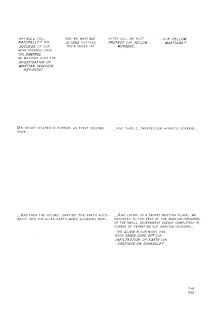
I've been having an interesting discussion with plok, concerning the nature of comics and communication. That's given me the idea to try an experiment. Let's look at this comic I threw together using imagry pulled from the Internet...

Now let's look at the same artwork, but with different text...

And once more...

We have here three very different stories with varying degrees of interest and/or excitement. But the artwork is identical throughout. Take a look at the comic without any text...

The different images really have nothing in common with one another, other than the fact that I've arranged them in sequence. In the earlier examples, I used the text to tie one image to the next, creating stories (of a sort) but the images by themselves tell no story whatsoever. Any story a reader might suppose exists is only whatever the reader imposes on it him/herself.
So, while the first three images are comics, the fourth is not. A reader cannot suppose with any accuracy what the writer may or may not intend without the benefit of some accompanying text. Maybe it's a story about global domination, but maybe it's just the story of a man who likes to watch British sci-fi on TV. As a reader, you can't know unless I, as the writer, tell you. A story can be invented for the artistic sequence, but it cannot be inferred.
This is an extreme example of a comic ceasing to be a comic when an element of it is removed. But most comics are not created in such a fashion and there's a decided grey area on whether or not a comic can still be considered a comic with certain elements missing. It seems to me that the defining characteristic is whether or not the story "reads" with any clarity towards the authors' original intent. And since that is dependent upon each reader as an individual, that cut-off point is going to vary with each reader as an individual. What may "read" cogently for one person may not for someone else.
And that's probably a big part of why we, collectively, have not been able to definitively define "comics".
 The Wife and I just picked up the last two Red Dwarf DVD sets and I recalled the Prelude to Nanarchy comic from a couple years ago. For RD fans who haven't seen it, here's exactly how you lose a starship when you park it next to one of those blue-green plantoidy things.
First off, here's today's Red and Rover comic strip...

It took me a couple of readings to figure out what was going on because instead of following the two-row, left-to-right format of most comic strips, artist Brian Basset has chosen to work his strip in more of clockwise fashion; left-to-right on the top row, right-to-left on the bottom.
I applaud Basset for trying something different, especially given the context of "high" art within this particular strip. The problem, though, is that it doesn't work terribly well here. In the first place, the newspaper comic strip format is VERY standardized and, while I don't necessarily agree with that, it's set up an expectation for the readers. Anything other a typical format must be handled very carefully to ensure that readers won't get lost. In the second place, the distinction between the first and second rows is too definite. You could literally cut the strip in half and you won't "break" the strip. What needed to happen is that the right-most panels, where the transition is occurring, should be more transitive and show a definitive merge from one direction to another. In effect, it needed to be drawn as one larger panel with two sets of figures.
Again, kudos to Basset for the attempt, but it didn't quite work this time. But what I think this means is that we need to see more experimentation of this type in the newspaper strip format. Assuming, of course, the newspaper strip is going to be around long enough to see that!
 Henry Jenkins is dirctor of the media studies program at MIT, and has written several books on how people interact with different forms of media. His interest in recent years seems to focus largely on video games, but he has done some work on comic books and science fiction. His book Textual Poachers I found particularly fascinating.
Anyway, I wanted to make quick mention here that I just found his blog where he covers all sorts of media studies topics, including comic books.
Over at Tom Brevoort's blog yesterday, he noted that Klaus Janson (with an assist from Walt Simonson) recently came in to the Marvel offices to teach a course in comic storytelling to the editors. At one point, evidently, the discussion ranged into the area of "a comic with the words removed is still a story, but a comic with the art removed is not." Tom's initial reaction was to disprove that notion with the following sketch...

A couple of people -- including myself -- pointed out that, in this case, the text and the word balloons themselves are acting as art. However, I'll also point out that it's not impossible to come up with a solid example of a comic that would read reasonably well without the art. Here's a random page from Shock Suspenstories #7...

And here's the same page without the art...
Even without the sound effects, and the fact that we're jumping into the middle of a story, it still seems to make perfect sense to me. Conversely, though, here's an example of a comic page with the text and word balloons removed...

It's from Scott McCloud's Understanding Comics and in this sequence, he's discussing nuances of language and imagry. Becuase of the specific nature of what McCloud was trying to do here, we have effectively the same image repeated six times. (Ten times, actually, since the previous page in the book has four more copies of the same panel.) But without the text, does this tell you anything? We see a man standing in front of a painting. He moves his arms a bit, but I don't know that that really conveys a story of any sort.
Or what about a sequence whose narrative is entirely disconnected with the imagry depicted? I can't seem to find a solid example of that offhand, but I'm sure I've got a few stashed away in my collection somewhere.
What I mean to boil this down to is that storytelling is an art, whether you use words, pictures, sounds, gestures, whatever... Comics are a form of storytelling that can, but not necessarily always include pretty pictures and/or flowery language. Comics, despite McCloud's excellent attempt, still defy a concise definition. Or, at least, a generally accepted one.
At some point, comics cease to be comics but the question is: at what point?


 Just a quick note to point out another place to download comics LEGALLY online. Golden Age Comics is the "#1 site for downloading FREE copyright free golden age comics." That is, they have old GA comics that have passed into public domain available for download without charge. By my count, they've got over 1,600 comic books already and a bunch of comic strips. Some of it fairly well-known, too: Plastic Man, The Shield, Airboy Comics, and Marvel Family to name a few.


