Latest Posts

I came across a piece I wrote back in 2011 where I talked a bit about my background and then-current thinking about US politics and elections. I'll quote a bit of it here...
After I got out of college, I started paying attention to the world around me a little more. I started listening to the news, and understood things that were happening to people well outside my sphere of influence. Politics inevitably came up, and I started seeing politicians a little differently. They were still lousy bastards that weren't worth voting for, and I still didn't see any that even remotely reflected my views, but I did start seeing that some were not only not acting in my best interests, but actively working against everybody's interests except their own...

So I began voting. Cynically. As much as I would like to vote for a candidate, I sadly myself voting against them at least as often as not. The lesser of two evils, as it were.

I don't expect government to work for me. I don't expect them to act in my best interests. I expect that the only person that's going to stick up for me is me...

I'm scared, in part, because I don't have any answers. I don't even know the questions. I'm scared because I can't expect my government (local, state or federal) or any business I have to deal with to do anything but screw me over in every way they can. I do what I can, and that's largely just working to keep my head above water and, maybe, find a piece of driftwood to cling onto.

And, you know, that really kind of sucks that someone like me, doing even moderately well, has to think like that.
My situation has improved considerably since 2011. I have a very loving and supportive wife. I've moved to an area that isn't fundamentally at odds with all my values. I've advanced in my career and am making more money than I was then. I have less debt than I had then. The technology I have at my disposal is more advanced than what I had then. The opportunities and achievments I've made in comics are light years beyond what I ever imagined! (I am still awestruck that I was nominated for an frickin' Eisner Award last year!)

And yet, I'm still scared. I still don't know the questions, much less the answers. I wrote back then, "I'm pretty well scared shitless. Like, building a bomb shelter with enough supplies for several years, type of scared." And while I don't have a bomb shelter, I have done a lot of actual preparedness work and have several months of supplies stocked up. (My wife actually made a point of not going grocery shopping for all of October, just so we could clear out some of the older items out of the pantry and freezer. For the entire month, our only grocery purchase was a gallon of milk. We could've easily gone another month before we would've considered getting to the actual emergency rations!) I'm in a better place than I was in 2011 at just about every level possible, and I still don't see myself as doing anything but keeping my head above water because all that can get wiped away in an instant. Whether via a climate change enhanced tornado or some random gun owner who was coerced through an act of stochastic terrorism to destory the fictional child sex trafficking ring in the non-existent basement of a pizza place where I happened to pick up dinner on the wrong night, everything I've achieved since 2011 can vanish.

I had two friends comment on that 2011 piece at the time. One noted my "deep political despair" and the other said he had, just prior to seeing my piece, had been given a "big pessimism recharge" just from the day's news. Both of those friends have since passed away, the first through a random act of nature, the other's pessimism continued to amplify by working in politics trying to solve what he saw as the biggest problems to the point where he found it better to take his own life. Coupled with my own experience in 2018 of getting hit by a barely-in-control-of-his-vehicle SUV driver, I am well aware of the tenuous grip we have on whatever we might call "safe."

This year, there are a lot of people on ballots across the United States who are actively trying to subvert whatever we have that passes for democracy. I say this without an iota of hyperbole. There are candidates at every level of government, from school board members to mayors to state reps to senators, that don't care what a majority of the people actually vote for if it's not also what they want. It doesn't matter if you think they've been brainwashed by OAN or they're narcassitic millionaires or they're just racists or what, the outcome of them gaining any sort of power is the same: the active dismantling of democracy.

So please vote if you're eligible. Show these people that their selfish, small-minded, and downright cruel approach to politics and even life itself is not welcome. I have many, many problems with establishment Democrats and their messaging throughout this year's campaigns have been abysmal. But the alternative is, again without hyperbole, the end of the United States as even the pale facsimile of democracy that it already is. You think things are chaotic now? They can get so, so, so much worse.

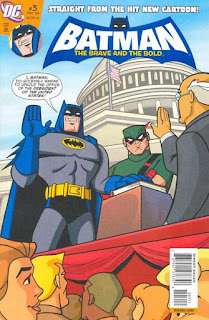
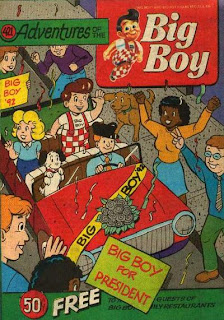
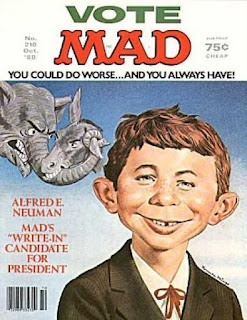
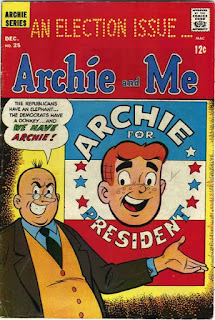
Yeah, I know, it's real bummer of a post on a blog about comics. Here's some topical comic book covers...
Back in 2010, Jason Shiga released his printer's nightmare of a book: Meanwhile... It was a choose-your-own-adventure style of comic with nearly 4,000 possible story combinations. What was perhaps unique about it, though, was that Shiga incoporated the notion of following the reader's path rather literally and instead "turn to page X" for each choice, the reader followed a visible path to the next panel which, when that required going to another page, was accompanied by a unique tab system Shiga had developed. Honestly, it's probably not nearly as "printer's nightmare" as any pop-up book, but it's certainly a more complicated printing process than your typical graphic novel. (Well, at least the original printing was. I seem to recall reading at some point that later versions had a simplified/non-die-cut version of the tabs.) Shiga's latest book, Leviathan, is something of a spiritual follow-up.

In Leviathan, you follow Ko Momon and navigate her through the town of Cloud Harbor. In the classic Dungeons & Dragons style, she encounters a stranger in the local tavern who gets her to embark on a quest to find the Starlight Wand and defeat the Leviathan. The story then unfolds as the reader makes choices about where to go, who to talk to, and what to say. Whether Ko finds either the Wand and/or the monster, and succeeds is up to the reader.

The story here is much more structured than in Meanwhile... in that there's more of a game element to it. While Meanwhile... had seemingly more random set of directions and outcomes, Leviathan is more concise and directed in where the story should be headed. As far as I can tell, there's ultimately only two possible endings here. (Or three, I suppose, if you consider just closing the book with the story unfinished as one of the outcomes.) But what's also different here is that Shiga includes several puzzles the reader has to figure out in order to move forward. In Meanwhile... you could just follow one decision to the next and eventually, you hit some kind of ending. Without solving some of the puzzles here, the reader would be left just taking the character through an endless series of loops. The puzzles aren't especially hard, but most require finding the answers elsewhere before you can come back to the puzzle location to solve it and there is at least one puzzle that requires a little out-of-the-box thinking as is noted in the text of the book itself.

Another notable difference from Meanwhile... is that Shiga has "solved" the printer's nightmare aspect of his storytelling. Instead of exclusively following a visual pathway, he borrows from the original Choose-Your-Own-Adventure books and relies on page number references. To be fair, he makes it much more visually interesting than simply "turn to page..." and incorporates the entire numbering into the page layouts and storytelling design of the book. This does make it a tad more cumbersome on the reader -- the tabs in Meanwhile... allow the reader to phyiscally thumb directly to the necessary page instead of checking page numbers -- but no moreso than any of those older CYOA books used to be.

What the page numbering also does is making navigating Ko to different locations very interesting visually. Each area Ko can travel to is represented on a series of maps and instead of presenting cardinal directions, the paths refer to different page numbers. It's kind of like a print version of those point-and-click adventure games. Just instead of clicking on the exit towards the right side of the screen, you turn to page 115.

I suppose Leviathan reminds me more of those point-and-click games than it reminds of Meanwhile... even though visually the two books are very similar. (Even beyond just Shiga's illustration style.) There's a very clear and linear -- if sometimes circuitously so -- story path, with concisely spelled-out objectives. This does mean that Levithan is probably less re-readable than Meanwhile... although I can't find any mention of how many paths and options there are. There seem to be far fewer choices than in Meanwhile... but I have no intention of counting!

It's an excellent use of the comic medium and far improves upon the reading experience relative to any other CYOA-style books I've seen. Since this also solves the printing concerns that might be present in something like Meanwhile... I'd be curious to see if other creators are able to pick up this idea so we can get more of these types of books. I don't doubt that they're more complex to structure and plan out than a typical comic, but it makes for a much more engaging reading experience.

Leviathan came out in September from Amulet Books and should be available from any regular book retailer for $14.99 US.
Here are this week's links to what I've had published recently...

Kleefeld on Comics: Halloween 1977
https://ift.tt/XEgCy6d

Kleefeld on Comics: Comics Social Media
https://ift.tt/L9Eq8hF

Kleefeld on Comics: That Distant Fire Review
https://ift.tt/kHK6TZu

Kleefeld on Comics: Rare Marketing Bit
https://ift.tt/kpmfzSs

Kleefeld on Comics: Andy Capp Talcum Powder?
https://ift.tt/ANTyfEn


While I was decorating my comic library, I made a conscious decision to include representation from a range of comics, not just the superhero stuff which is most commonly available. I tracked down a wall decal of Asterix and Obelisk, and I made my own of Little Nemo and Flip. I've got statues of characters from One Piece, Lucky Luke, and Fairy Quest. I've got Phoney Bone and Bob the Squirrel plushies. I've got a Judge's badge replica on my desk and a Crogan's Adventures prop knife on a bookshelf.

And at some point, I realized that I'd like to have something to represent a British comic strip. The Judge's badge brings a little English flavor to the room, but I wanted to try to balance out the drama representation with something light-hearted. Since Andy Capp is something of an old favorite of mine, I thought some kind of Andy Capp figure would be great!

Turns out there's not much commercially available, though. I had actually written to creator Reg Smythe about this when I was a kid, and he graciously wrote back noting there weren't as many licensing opportunities available as other comic strip characters, but maybe if he changed Andy's design a bit to include four legs and a tail... There have been a few items over the years, and indeed one pretty good three-dimensional representation of Andy.

I believe I first saw an image of the figure online as a background to a blog post or something. I didn't know what exactly it was, but it gave me something to look for. Eventually, I did start piecing together some information on it.

Turns out that it's not really a statue at all. It's a 9" tall, vinyl bottle for talcum powder produced by Avon (the cosmetics people) in 1969. The figure's body is hollow, and the head pulls off. Despite a fairly minimal paint job, it works pretty well; and most of the figures I've seen appear to have held up rather well. They were originally only sold in Britain, so Americans almost have to find one online and have it shipped overseas, but most of the ones I saw fell in the $15-$20 range and shipping didn't seem prohibitively expensive. With the head on fully, it's function as a talcum powder bottle is all but impossible to detect, and it ultimately makes for an excellent display figure to rest on your shelf.

Now, why Avon opted to license Andy Capp to sell talcum powder, I can't say. The character had been around for a little over a decade at that point, but I don't know that he was that popular. And who exactly was the target market here? Surely not kids -- what kid is that interested in talcum powder? And how many adults who might want to use talcum powder would be interested in having it displayed via Andy Capp on their bathroom vanity?

The production, as far as I can tell, was limited to 1969 only. So it doesn't appear to have sold that well. (No real surprise there.) That also might explain why so many that are still around seem to be in excellent condition.

Its a great, little piece that I'm happy to have in my library, but it raises more questions than I'm prepared to try to track down the answers for.
I've been actively buying back issue comics since, probably, around 1983/84. At the time, most comics were stored in simple plastic bags. The market had matured enough you could buy comic-specific bags by then, but they were fairly cheap plastic. Mylars were available, but almost prohibitively expensive (meaning that the bags themselves often cost more than the comics that were put in them). The notion of having an acid-free bag wasn't really even considered.

People eventually did start seeing their bags yellow with age, and realized it might affect the comic inside. Again, not a problem for mylars, but those weren't cheap. So the solution some people opted for -- assuming they just didn't keep the old bags around indefinitely -- was to simply replace the bags every few years. I think I recall hearing it was recommended to switch your bags every 4-5 years.

Over the past few decades, I've replaced most all of my bags. But I do have one old issue that's still in the regular plastic bag I bought it in. It was one of the first Fantastic Four back issues I bought, and I picked it up at a kind of mini-convention that was in a local shopping mall. I think there were maybe half a dozen vendors and that's it. But the reason it stands out so firmly in my mind was the, as far as I know, unique marketing gimmick the shop had taken. They'd printed up their own custom bags...
(For the record, Len Wein's signature came years later when I met him at another convention.)

In the past 30-some years, I have never seen another shop do this. Every comic you bought from Dragon's Lair came in a Dragon's Lair bag. This, I think, works better than a standard business card or flyer because not only do I have the shop's name and address, but I also know precisely which issue I bought from them. Even three decades later!

I don't know how pricey these bags were, or how many got thrown out as collectors moved to better quality materials, but it strikes me as a great piece of marketing for the time. Probably not as successful today, as the back issue market has largely fallen by the wayside in favor of trade collections, but it's a genius idea for 1984! Did any other shops ever try this?
On it's surface, That Distant Fire by J.R. Hughto and Curt Merlo is about a couple, Vera and Paul, who work as an engineering team. They work within the military industrial complex during the day, and spend their spare time and money developing what turns out to be a kind of Star Trek level medical scanner that's about the size of a compact. When Paul gets fired, though, Vera resigns and the two of them go back to his family's no-longer-working farm out in the country. The "local" agricultural giant has effectively shut down all the family-run operations, and has slowly been purging actual workers in favor of labor-saving drones. Much of the town is unemployed by the time Paul and Vera show up. This leads to strikes and protests, which corporate police shut down very violently. Paul and Vera are eventually forced to return to working for the corporate military in order to protect what's left of their family. Paul's sister, though, voews to continue to the fight.

The first thing I really liked about the book was how the world-building unfolds slowly and organically. You just get hints of what's the story world is like, but it's similar enough to today that it feels very familiar and it doesn't take much to piece together what turn out to be significant differences from those subtle hints. And, with the exception of the device Paul and Vera develop, pretty much every other piece of technology shown is currently available, although not necessarily implemented in the same ways. It is clearly set in the future, but only just beyond where we are.

And that's what really hits with this story. We see all this familiar technology, we see people dress and act as we might see people today, and yet the social conditions they live in are where most of the differences are. But they're not even that large. You can easily see today's society reflected in the book; it's just amplified a bit. Not to a comical degree that you might find in, say, Robocop or Judge Dredd but just enough to make you think, "Yeah, I could see things being like that within ten years." And it's that short implicit timeframe, coupled with some excellent storytelling, that makes the book really powerful.

Hughto's story is solid to begin with, but he's got a really solid handle on how different people react under different situations. Paul doesn't make the same choices his brother does, and neither make the same choices their sister does. Every one of them -- and all the other characters -- have choices driven by their individual goals. No one feels like just a cookie cutter stereotype, or a character thrown in just because they needed someone to do some exposition. Further, this is really enhanced by Merlo's art. His illustrations drive much of the story, such that there's almost no dialogue until the end of the first chapter. Every panel seems very considered and deliberate, telling readers precisely what it needs to. Honestly, it's been a while since I've read a comic where the script and art worked so harmoniously with one another, even longer since I've read one like that where the writer and artist weren't the same person!

If I had to lodge a complaint against the book, it's that it's too uncomfortably believable. We've had several years now of absolute bullshit thrown at everyday citizens like you and me, with corporations winning against us at almost every turn. We see police brutally murder people almost daily and walk away scot-free. We get mainstream news articles telling us that "quiet quitting" -- i.e. doing what you're actually paid to do and not donating hundreds of extra hours to your employer every year -- is a crime against the company, and you should be let go because you're not a "team player." We get rich assholes spending billions of dollars to buy companies for no other reason than to satisfy their own ego. We get corporations illegally cracking down on attempts to unionize and getting away with it. We get a political party that is actively attempting to dismantle democracy with absolutely zero consequences. In light of every news item that cross your feed, there is no way you're not going to see this book as a very, very, very plausible future. And while Vera and Paul are, by some measures, better off at the end of the book than at the beginning, they very much do not win.

Because that's what happens in life. The fights you often have to fight aren't going to help you; they'll help your children or your grandchildren perhaps, but not you. And because of that, that means you have to play the long game. You sometimes have to take losses in battle to win the war. But, honestly, there are a lot of times when that is REALLY hard to remember. And even though That Distant Fire very expressly makes that point, it also shows how hard that can be too.

That Distant Fire was originally a crowd-funded project from this past summer, but it's now available from Black Eye Books and retails for $27.95 CA.
So there's been a lot of chatter in recent days about leaving Twitter now that Elon Musk has purchased it outright. I've seen some of my friends deactivate their accounts already. I won't judge anyone who leaves, but for now at least I still get enough out of it to find it more useful than not.

But where do they leave to? If anywhere? I've had friends drop social media entirely and if I want to contact them, I have to email. Some folks already have accounts across Instagram and Tik Tok and whatever else, but those have had their issues as well. As with any such platform, it's all fun and games until money starts getting involved, right?

A number of people have mentioned Mastodon. Primarily, I think, because it's the platform whose functionality is closest to Twitter. Plus, it was around when the last potential Twitter mass exodus was considered in late 2017 when Twitter was pretty actively not cracking down on hate speech. I think with the sharp rise in the same again with Musk's purchase, people are recalling they had set up an account some years back which has been laying dormant.

The reason, though, that it was dormant was because Mastodon hasn't really reached that critical mass yet. Where you can log in at any time and can confidently expect some new activity to have popped up in your feed. There weren't enough people using it for that to happen. Or, with the way Mastodon is set up, there weren't enough people in each of their nodes for that to happen. They had split things up basically into interest groups, so your feed wasn't really everybody talking about everything, it was a small group of folks talking about webcomics (or whatever). A lot of those nodes seem to have shut down since then, however, and users have been shunted over into a more broad "social" node. We'll see how that does.

Interestingly, Ted Dawson recently started a social media platform expressly centered around comics. Called Kablooey, it's a little more akin to Facebook than Twitter but the discussions are decidedly more focused. I've had an account there for a few weeks now, but I've honestly not really had a chance to explore everything yet.

This isn't the first time someone's tried to make a social media platform that was comics' focused (ComicSpace) but it's WAAAAY too early to tell what's going to happen with Kablooey. A lot of it boils down to the community it attracts, but that is influenced by the UX and moderation policies and everything else. I know Dawson is eager to see it do well and, in the wake of Musk's Twitter takeover, he might be well-positioned for exactyly that.

I think that frequently these types of things are successful or not -- and attract that critical mass of users or not -- based on a handful of key influencers. Comixology really took off not because they had the best selection of digital comics, but because Steve Jobs put it on the first gen iPads. I seem to recall a number of comics people flocking to MySpace when Brian Michael Bendis set up an account there. Fans will go where the people they're most interested in are; those might be friends and relatives or those might be professional contacts or they might be celebrities of some sort. If Mastodon or Kablooey or something else catches the eye of the right person, or the right handful of people, that will be the next platform to do well. And right now, I have no idea what that will be.

In the meantime, I'm @SKleefeld on Twitter, Mastodon, and Kablooey. Pick a platform and come say 'hi.'