

 Here are this week's links to what I've had published recently...Here are this week's links to what I've had published recently...

In 1949, Gould was presented with a special citation from the Police Athletic League on The Fred Waring Show...
A few years later, in 1965, Gould was featured on To Tell the Truth (hosted by former Superman voice actor Bud Collyer)...
Finally, a 1982 audio interview with Gould on the subject of gun control...

Chip's father, Art Sansom, first created the strip back in 1965 after over a decade on the strip Chris Welkin—Planeteer with writer Russ Winterbotham. He did go to school for an art degree, but spent his early career working as an engineer for GE. In any event, once Brutus Thornapple became the titular character of The Born Loser, Art continued working on that strip until his death in 1991.
As with many legacy strips, Chip started helping his father out in the mid-1980s. (Meaning, I would likely have read at least a few years' worth of strips that he had a hand in. How much was Art and how much was Chip seems impossible to determine, though.) I recall the strip always feeling a bit dated. Not that it was necessarily unfunny, but it frequently came across like watching an episode of Leave It To Beaver for the first time. You get the jokes and smile or chuckle a bit, but so much of it is rooted in the culture of its time that it doesn't speak to you very strongly.
As I said, Chip took over completely when his father passed in 1991. I've seen it only sporadically since around 1989/90, but the ones I have seen suggest that Chip remains very true to what Art began. And it strangely still feels rooted to 1965. It kind of works given that part of the strip's conceit is that Brutus is always somewhat out of touch, although the strips I've seen that take place in his office, which also looks to be rooted in the 1960s. I've rarely seen even GE CEO Jeff Immelt in a suit, much less wear one every day to the office. Keeping Brutus himself out of step with society makes sense, but keeping the environment frozen is probably making the strip seem more dated than it is. No one seems to have computers on their desks, everyone wears a tie to work, they still carry briefcases into the office... The closest thing I've seen to being "current" is from a strip in March where Brutus tries convincing his uncle to get a DVR -- I honestly don't know if they even make those any more! I haven't heard of or seen one mentioned in maybe ten years now?
Regardless, here's the weird thing that struck me: Art worked on the strip from 1965 until 1991, 26 years. From 1991 until today has been 31 years. Even if you ignore whatever work Chip did before 1991 (I've seen some places note he was actually the only one working on it as early as 1989; others say he was writing the strip in 1987 but didn't take over the art chores until 1991) that means Chip has worked on more of the strips than his father ever did! So while he continues to include Art's name in the credits, the strip is really more his than his dad's at this point. Regardless of what you think of the strip's humor or illustrative style or whatever, that tenure is certainly something worthy of crediting. Congrats, Chip!

Sheldon "Shelly" Mayer is a well-known name in the comic book industry. He was one of Major Malcolm Wheeler-Nicholson's earliest employees at the company that would later be known as DC Comics, and is often credited with "discovering" the Superman sample strips that eventually led to Action Comics #1. He would also go on to oversee the creation of the Flash, Green Lantern, Hawkman, Wonder Woman, and others, and he himself created Red Tornado (the first female superhero) and Sugar & Spike taking on the writing and drawing duties for those characters. When his eyesight started failing enough to keep him from drawing, he continued writing, working on titles like House of Mystery, House of Secrets, and Forbiden Tales of Dark Mansion as well as co-creating Black Orchid. He eventually passed away in 1991.
So if Mayer spent his entire career working for DC Comics, why am I calling him a comic strip artist in the title?
Because just before finding Superman and joining DC, he spent about five months working as a nationally syndicated cartoonist.
George Storm created the comic strip Bobby Thatcher in 1927. The titular character was a 15-year-old orphan who ran away from an abusive guardian, leading to a decade's worth of adventures. It was an adventure strip not dissimilar to Little Orphan Annie but without a Daddy Warbucks character to have as a safety net for the hero. Think: a slightly younger Tintin.
The strip was fairly well-received, weathering the Great Depression with seemingly little difficulty. That said, the character wasn't exactly a chart-topper, as evidenced that he was never picked up for other media, the way Annie, Flash Gordon, and other adventure heroes were.
For reasons I can't seem to uncover, Storm left the strip in mid-1937. As he went on to live until 1976, it doesn't seem to have been a health issue. He worked for DC, Dell, and other comic book publishers throughout much of the 1940s, so there doesn't sound like he had any issues with his drawing ability, either physically or emotionally. I did come across a quote from Mayer online suggesting that Storm had gotten tired of the drudgery of a daily strip and Mayer had been largely ghosting the strip for several months anyway. (Although the site where I found that is no longer around and it never cited a source to begin wit.) But regardless, Storm left the Bobby Thatcher and it was Mayer who kept the story going.
Mayer's time on the strip is believed to be from June 7 until October 16, 1937. The strips had simply been numbered sequentially for most of it's run, with a switch to actually dating them on June 7, suggesting that's when Mayer took over. The aforementioned site also seems to suggest that Storm was still doing the basic storytelling, perhaps doing pencils or rough layouts, with Mayer doing at least the inking if not a majority of the illustration. This also seems to be at the behest of the McClure Syndicate, who distributed the strip, as indicated by their telling Mayer to finish inking the last two weeks of strips before it would be cancelled.
Sadly, I can't seem to find a copy of one of Mayer's strips that isn't behind a pay wall. So, just to show an example of the strip in general, here's one from early in Storm's run.
But it's an interesting footnote to Mayer's long career in comics that one of his earliest jobs was still working on a nationally syndicated strip. And it says much to Mayer's influence on the medium that he did so much other work later that Bobby Thatcher is scarcely ever even mentioned!
So if Mayer spent his entire career working for DC Comics, why am I calling him a comic strip artist in the title?
Because just before finding Superman and joining DC, he spent about five months working as a nationally syndicated cartoonist.
George Storm created the comic strip Bobby Thatcher in 1927. The titular character was a 15-year-old orphan who ran away from an abusive guardian, leading to a decade's worth of adventures. It was an adventure strip not dissimilar to Little Orphan Annie but without a Daddy Warbucks character to have as a safety net for the hero. Think: a slightly younger Tintin.
The strip was fairly well-received, weathering the Great Depression with seemingly little difficulty. That said, the character wasn't exactly a chart-topper, as evidenced that he was never picked up for other media, the way Annie, Flash Gordon, and other adventure heroes were.
For reasons I can't seem to uncover, Storm left the strip in mid-1937. As he went on to live until 1976, it doesn't seem to have been a health issue. He worked for DC, Dell, and other comic book publishers throughout much of the 1940s, so there doesn't sound like he had any issues with his drawing ability, either physically or emotionally. I did come across a quote from Mayer online suggesting that Storm had gotten tired of the drudgery of a daily strip and Mayer had been largely ghosting the strip for several months anyway. (Although the site where I found that is no longer around and it never cited a source to begin wit.) But regardless, Storm left the Bobby Thatcher and it was Mayer who kept the story going.
Mayer's time on the strip is believed to be from June 7 until October 16, 1937. The strips had simply been numbered sequentially for most of it's run, with a switch to actually dating them on June 7, suggesting that's when Mayer took over. The aforementioned site also seems to suggest that Storm was still doing the basic storytelling, perhaps doing pencils or rough layouts, with Mayer doing at least the inking if not a majority of the illustration. This also seems to be at the behest of the McClure Syndicate, who distributed the strip, as indicated by their telling Mayer to finish inking the last two weeks of strips before it would be cancelled.
Sadly, I can't seem to find a copy of one of Mayer's strips that isn't behind a pay wall. So, just to show an example of the strip in general, here's one from early in Storm's run.

But it's an interesting footnote to Mayer's long career in comics that one of his earliest jobs was still working on a nationally syndicated strip. And it says much to Mayer's influence on the medium that he did so much other work later that Bobby Thatcher is scarcely ever even mentioned!

It was about a fifteen years ago that I came across a cheap copy of R.C. Harvey's Children of the Yellow Kid, which I wrote about here. That was my first eye-opening experience that I knew much, much less than I thought I did. Just sitting down to look at a relatively brief overview highlighted how little I really had picked up over the years. I've been trying to play some level of catch-up every since (without letting current comics fall to the wayside either).
(On a side note, it wasn't long after that I've had similar revelations about other comics formats as well. Manga, European comics, undergrounds, Golden Age comic creators who didn't keep working into the Silver Age... I've been actively trying to pick up on all that as well. )
I've known this for a while, but in digging up those actors-who-portrayed-a-comic-hero-and-then-a-comic-villain I mentioned yesterday, that's highlighted for me (yet again!) that there is far, far less that has been written/researched on comic strips and their creators, compared to comic books and theirs. There's not nothing, certainly, and we've actually seen a number of good books come out in the past couple years to start to rectify this, but I think there's still a huge disconnect between what could be written about newspaper strips relative to what has been written. Especially when you consider how pervasive the form was throughout the entire 20th century.
I mean, it is almost weekly for me that I hear about some comic strip or creator that I'd never even heard of before. (Or I'd heard of briefly and promptly forgot about!) Granted, comic strips are not a topic I spent my entire life studying, but considering how much overlap there is with comic books (which I have spent my entire life studying) and that I've been actively trying to bone up on strip history over the past decade or so, I can't imagine how much isn't recognized AT ALL by those who's interest is even more tangential. Like a fan of the Marvel superhero movies. They enjoy the films and are interesting in going to "comic cons" but if you ask them to name the creator of a newspaper comic strip, I doubt they'd be able to come up with more than Schulz, Waterson, Davis, and maybe one other if they have a favorite strip.
And while you might say, "Well, of course!" bear in mind that guys like Al Capp and Milton Caniff once graced the cover of Time. Not their characters, the creators themselves! Guys like Winsor McCay and Otto Soglow were revered like royalty. Walt Kelly and Joseph Musial were greeted with warm respect at the 1954 Senate Subcommittee Hearings into Juvenile Delinquency, while virtually every other comic witness was painted as a "paid apologist."
We are, as I said, getting more research done into some of these folks, and there's certainly more available now than there ever was before, but it's interesting to note that there's still a lot that isn't widely known even among comic experts.
In The Dark Knight from 2008, Harvey Dent relays the line “You either die a hero or you live long enough to see yourself become the villain.” Although he was ostensibly talking about Julius Caesar, many viewers picked up on the fact that Dent's character, while Gotham City's honorable District Attorney at the time, would eventually become the villanous Two-Face, making the line a bit of foreshadowing. Interestingly, while it was intended to be fairly self-contained to that specific movie, fans brought it out again almost a decade later when Michael Keaton took up the role of The Vulture in Spider-Man: Homecoming. With Keaton being very well-known for and still strongly associated with the Batman movie franchise he helped kick off back in 1989, for him to go from playing the heroic lead to the primary villain within two of the largest superhero properties, it's not surprising that it drew a fair amount of attention.
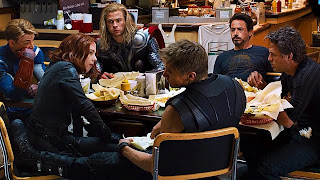 Couple that with the ongoing popularity of "comic book movies" led by the Marvel and DC superhero characters, it's also not surprising that some high profile actors get cast in multiple roles for characters that originated in comics. Folks like Chris Evans has gotten enough of them now that his schedule has literally overlapped their filming schedules -- he's somewhat famously hiding his face in the schwarma restaurant in the end credits scene of Avengers because he was in the middle of filming Snowpiercer.
But, as someone who's something of a historian of comics and comic-related stuff, I'm actually a little frustrated that people keep trotting out the same handful of examples of actors who've played multiple characters that originated in comics. There have been a lot more comic-related movies and TV shows than most people realize, and a lot more actors who've played multiple parts too. So on Friday, I took a cue from the Harvey Dent line and started a Twitter thread highlighting actors who played a comic book hero and, sometime later in their career, played a comic book villain. It didn't take me long at all before I got north of 50 actors and I stopped counting.
Each post is simple. The Harvey Dent line, the actor's name, and one photo each from their hero and villain roles. "Hero" and "villain" are bit fuzzy in places, of course, particularly when it comes to non-superhero stories. I also made the 'rule' that at least one of the two roles had to be a live-action performance; I know many voice-over actors are asked to play both heroes and villains so regularly that sometimes they do both within the confines of a single TV episode. (So you won't find Frank Welker or June Foray in the list!) Here's the start of the thread if you're interested...
I wasn't surprised to find so many actors who played a comic-based hero before a comic-based villain, but I was surprised how few seemed to do the reverse. Many actors seem to "front-load" their careers with more heroic roles and save the villainous ones for later. I think there's actually two, not mutually exclusive, things at play here.
First, I think younger actors tend to gravitate towards the heroes more because, frankly, it makes them look better. They understand that many viewers ascribe the traits of their characters onto them (rightly or wrongly) and they'd no doubt prefer to have the positive attributes of a hero than the negative attributes of a villain. We all do that to some degree, I think; we are the heroes of our own stories after all. That's why everyone else's social media feed looks so much better than your life; you're just seeing their curated highlights while you're stuck with all of your own crap. So it's no surprise that they want to play Superman instead of Lex Luthor.
As they get older, they realize there can often be more to do with villains. Heroes can be boring; they do the right thing and have a level of predictability because of that. Villains can have all sorts of motivations, and can take their characters in unexpected directions. Think of Heath Ledger's Joker or Jonathan Majors' Kang -- both were highlighted performances not just because their were different than just about anyone (including the directors!) expected but also because to come from actors so young is highly unusual. Those types of performances tend to come more from older actors who have done the hero thing much longer and are expressly looking to do something different.
The second thing at play is that I think there's a subconscious visual many people have about what a hero and villain look like. A hero is young, attracive, and vibrant, while villains are older and less attractive. Even scarred or disabled. We associate external traits with internal ones -- the imperfections of life act as a reflection of our souls, as it were. While there's some validity in using this type of idea as a storytelling shorthand, it's also frequently used as a crutch. That's not always the case, of course, but that's what Killmonger is covered with scars and Klaw is missing an arm. And it's why we, as an audience, aren't meant to fully trust Nick Fury either.
I'll keep adding actors to my thread as I think of them. It makes for an interesting study, both from strictly the historical side, but also the visual narrative side as well.

But, as someone who's something of a historian of comics and comic-related stuff, I'm actually a little frustrated that people keep trotting out the same handful of examples of actors who've played multiple characters that originated in comics. There have been a lot more comic-related movies and TV shows than most people realize, and a lot more actors who've played multiple parts too. So on Friday, I took a cue from the Harvey Dent line and started a Twitter thread highlighting actors who played a comic book hero and, sometime later in their career, played a comic book villain. It didn't take me long at all before I got north of 50 actors and I stopped counting.
Each post is simple. The Harvey Dent line, the actor's name, and one photo each from their hero and villain roles. "Hero" and "villain" are bit fuzzy in places, of course, particularly when it comes to non-superhero stories. I also made the 'rule' that at least one of the two roles had to be a live-action performance; I know many voice-over actors are asked to play both heroes and villains so regularly that sometimes they do both within the confines of a single TV episode. (So you won't find Frank Welker or June Foray in the list!) Here's the start of the thread if you're interested...
“You either die a hero or you live long enough to see yourself become the villain.”
— Sean Kleefeld (@skleefeld) April 8, 2022
I'm starting an ongoing thread showcasing actors who played a comic book hero followed by a comic book villain. Not just two characters from comics, but a hero and then a villain.
I wasn't surprised to find so many actors who played a comic-based hero before a comic-based villain, but I was surprised how few seemed to do the reverse. Many actors seem to "front-load" their careers with more heroic roles and save the villainous ones for later. I think there's actually two, not mutually exclusive, things at play here.
First, I think younger actors tend to gravitate towards the heroes more because, frankly, it makes them look better. They understand that many viewers ascribe the traits of their characters onto them (rightly or wrongly) and they'd no doubt prefer to have the positive attributes of a hero than the negative attributes of a villain. We all do that to some degree, I think; we are the heroes of our own stories after all. That's why everyone else's social media feed looks so much better than your life; you're just seeing their curated highlights while you're stuck with all of your own crap. So it's no surprise that they want to play Superman instead of Lex Luthor.
As they get older, they realize there can often be more to do with villains. Heroes can be boring; they do the right thing and have a level of predictability because of that. Villains can have all sorts of motivations, and can take their characters in unexpected directions. Think of Heath Ledger's Joker or Jonathan Majors' Kang -- both were highlighted performances not just because their were different than just about anyone (including the directors!) expected but also because to come from actors so young is highly unusual. Those types of performances tend to come more from older actors who have done the hero thing much longer and are expressly looking to do something different.
The second thing at play is that I think there's a subconscious visual many people have about what a hero and villain look like. A hero is young, attracive, and vibrant, while villains are older and less attractive. Even scarred or disabled. We associate external traits with internal ones -- the imperfections of life act as a reflection of our souls, as it were. While there's some validity in using this type of idea as a storytelling shorthand, it's also frequently used as a crutch. That's not always the case, of course, but that's what Killmonger is covered with scars and Klaw is missing an arm. And it's why we, as an audience, aren't meant to fully trust Nick Fury either.
I'll keep adding actors to my thread as I think of them. It makes for an interesting study, both from strictly the historical side, but also the visual narrative side as well.
Here are this week's links to what I've had published recently...


